Roof Moss Removal in Vancouver, BC
Moss brushed off by hand, never pressure washed, then treated so the roots die and the roof can dry out. Zinc strips to slow regrowth, low-pressure soft washing for black streaks and lichen, and careful cleaning for cedar shake roofs. For the shaded, north-facing roofs that Vancouver's rain season turns green.
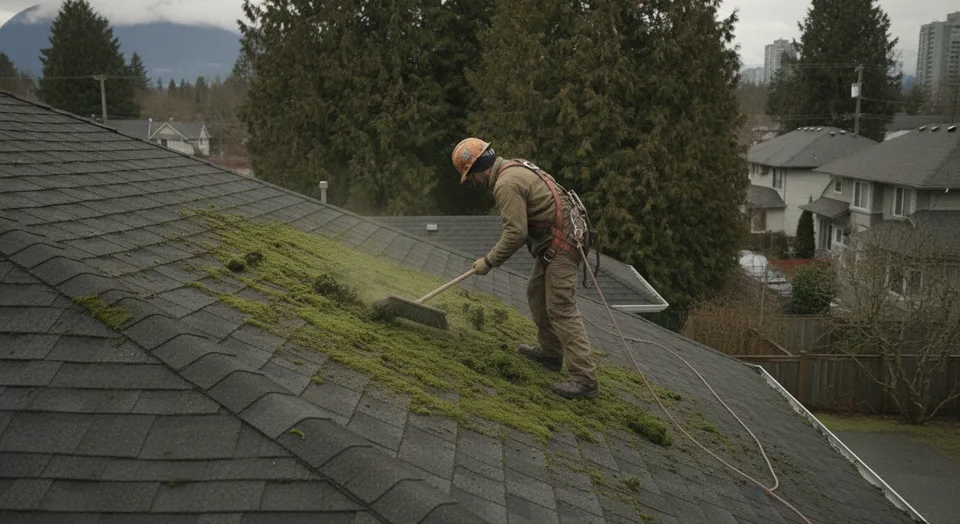
Vancouver is close to ideal for roof moss: a long, mild rain season, few hard frosts to knock it back, and streets of mature trees that keep roofs shaded and damp. The north and east slopes go first, then anything under a tree. The low-pitched roofs of Vancouver Specials hold moisture longer than steep ones, and the cedar shake roofs still found on West Side houses suffer most of all. Moss is not just a look. It lifts shingle tabs, holds water against the roof deck and shortens the life of the roof. This is the booking line for one insured roof moss crew that removes it by hand, treats the roof so it stays off, and never takes a pressure washer to your shingles.
Roof Moss Work We Take On in Vancouver
Roof moss removal, moss treatment and prevention, zinc strip installation, low-pressure roof soft washing, and cedar shake roof cleaning.
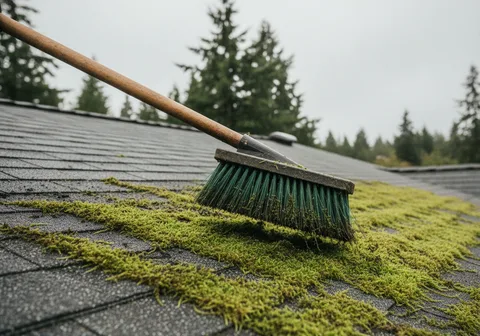
Roof Moss Removal
Moss brushed and scraped off by hand, working down the slope, then treated so what is left dies off. No pressure washer on your shingles.
Learn more →
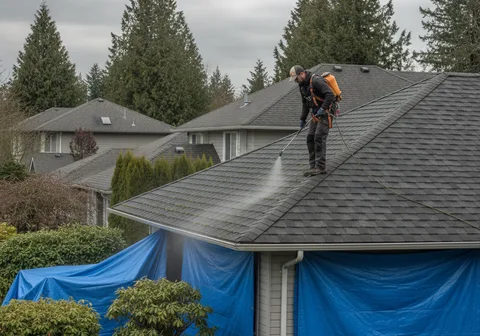
Moss Treatment & Prevention
Treatments applied on dry days to kill moss at the root and slow regrowth, with runoff kept away from drains, gardens and ponds.
Learn more →
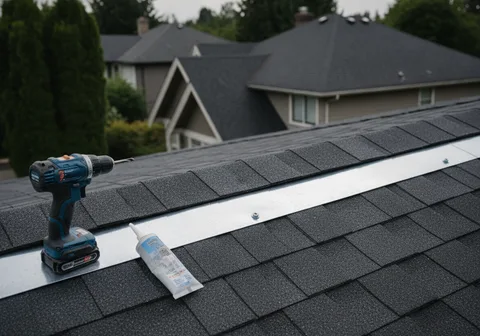
Zinc Strip Installation
Zinc strips fitted just below the ridge after the moss is cleaned off, so every rain carries a little zinc down the roof and slows regrowth.
Learn more →
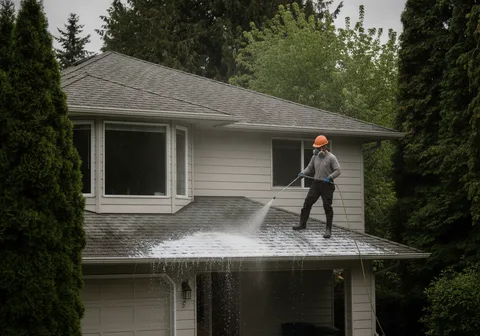
Roof Soft Washing
Black algae streaks, lichen and grime cleaned off with a low-pressure wash and a cleaning solution, not a pressure washer.
Learn more →
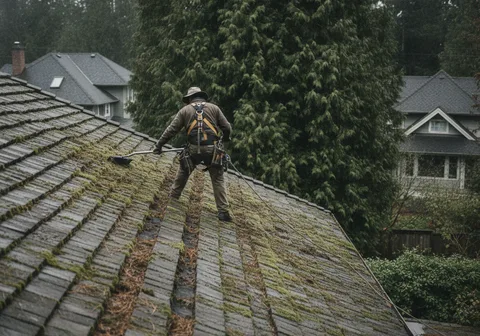
Cedar Shake Roof Cleaning
Moss, needles and debris cleared from between the shakes, a gentle clean, and a preservative treatment, with an honest view on whether the roof is worth it.
Learn more →
Roof Moss in Vancouver: Why It Grows and How to Get Rid of It Without Hurting the Roof
Shade, slope and the north side of the roof. On almost every Vancouver street you can see which roofs face north: they are the green ones. A north or east slope gets little winter sun, stays wet for days after each rain, and gives moss the long damp season it needs. Add a neighbour's cedar, a street tree that has grown over the eaves, or a house close on the south side, and moss can cover a slope within a few years. Opening up overhanging branches, where the trees are yours to trim and bylaws allow, does as much to keep moss off as any treatment.
Vancouver Special roofs and shake roofs. The low-slope roofs on Vancouver Specials drain slowly, and moss there tends to spread in a thick, even mat that holds a great deal of water. Those roofs are gentle to work on but need careful removal so tabs are not lifted. Cedar shake roofs, still common on older West Side houses, are the opposite: moss and needles lodge between the shakes and keep the wood wet. Shakes are cleaned and treated differently from asphalt, and on an ageing shake roof the first question is whether it is worth cleaning at all.
Moss is not just cosmetic. Moss holds water against the roof like a sponge through the whole rain season. On asphalt shingles it lifts the edges of the tabs, wicks water under them and loosens the granules that protect the shingle from the sun. On cedar shakes it keeps the wood damp and speeds up rot. On any roof it sends grit and clumps down into the gutters. A roof that would have lasted twenty-five years can need replacing years early if the moss is left alone.
Why pressure washing is the wrong tool. A pressure washer will take moss off in minutes, along with a good share of the shingle's granules, and it can drive water up under the shingles and into the roof deck. Most shingle manufacturers warn against it. The right method is to remove the bulk of the moss by hand with brushes and scrapers, working down the slope, then treat what is left so the roots die and wash off over the following months. Where a roof needs cleaning, it is done at low pressure with a cleaning solution, not blasted.
Treatments, runoff and the storm drain. Moss treatments are applied on a dry day so they stay on the roof, in measured amounts rather than soaked on. Runoff is the concern: in much of the Lower Mainland, storm drains carry water straight to creeks, the Fraser or the ocean without treatment. Downspouts that drain to the storm system are protected during treatment, gardens and fish ponds below the eaves are covered or rinsed, and the product is chosen for the roof material and what is underneath it. If your municipality or strata has rules on what can be used, tell us when you book.
Roof work and WorkSafeBC. A mossy roof is slippery, and wet moss is worse. Under WorkSafeBC's fall protection requirements, workers at height need fall protection, and on a roof that means anchors and harnesses, not a careful step. If you want to check that a contractor is registered, WorkSafeBC issues clearance letters confirming a business's account is in good standing.
Serving Vancouver & Surrounding Areas
Fall protection rules are set by WorkSafeBC under the Occupational Health and Safety Regulation, and contractor clearance letters are also available from WorkSafeBC. Rules on what can enter storm drains, and on pesticide use, are set by the City of Vancouver and by the Province; check them for your address. Roof manufacturer warranty conditions, including cleaning methods, come from the shingle or shake manufacturer.
Frequently Asked Questions
Why is moss so bad on Vancouver roofs?
Months of rain, mild temperatures that rarely freeze moss back, and shade from trees and neighbouring houses. The north and east sides of a roof, and anything under a tree, get it first.
Will removing the moss damage my roof?
Done by hand and treated afterwards, no. Pressure washing and aggressive scraping can, which is why neither is used on shingles here. Shingles that are already lifting or brittle are pointed out before any work starts.
How long does it stay off?
With a follow-up treatment and zinc strips at the ridge, typically several years on a sunny roof and less under trees. A light treatment every year or two is the cheapest way to keep it off.
Do you clean gutters too?
This service is about the roof. Moss and debris that come off the roof are collected from the roof and the eaves, and you are told if your gutters need a separate clean.
Is the treatment safe for my garden and pets?
Treatments are applied carefully on dry days, plants below the eaves are protected, and you are told how long to keep pets off the area. If you have a pond, a vegetable bed or a rain barrel under the roof, say so when you book.
Can moss be removed in winter?
Moss is easiest to remove in damp weather, so the season is long here, but treatments need a dry window. Most work runs from early fall to late spring, with the timing set by the forecast.
Ready to Get Started?
Call 778-655-8715 or send the form for a written quote for roof moss removal in Vancouver.